
Getting a Pedigree Kitten: What Really Happens Between “I Want a Kitten” and Bringing Them Home
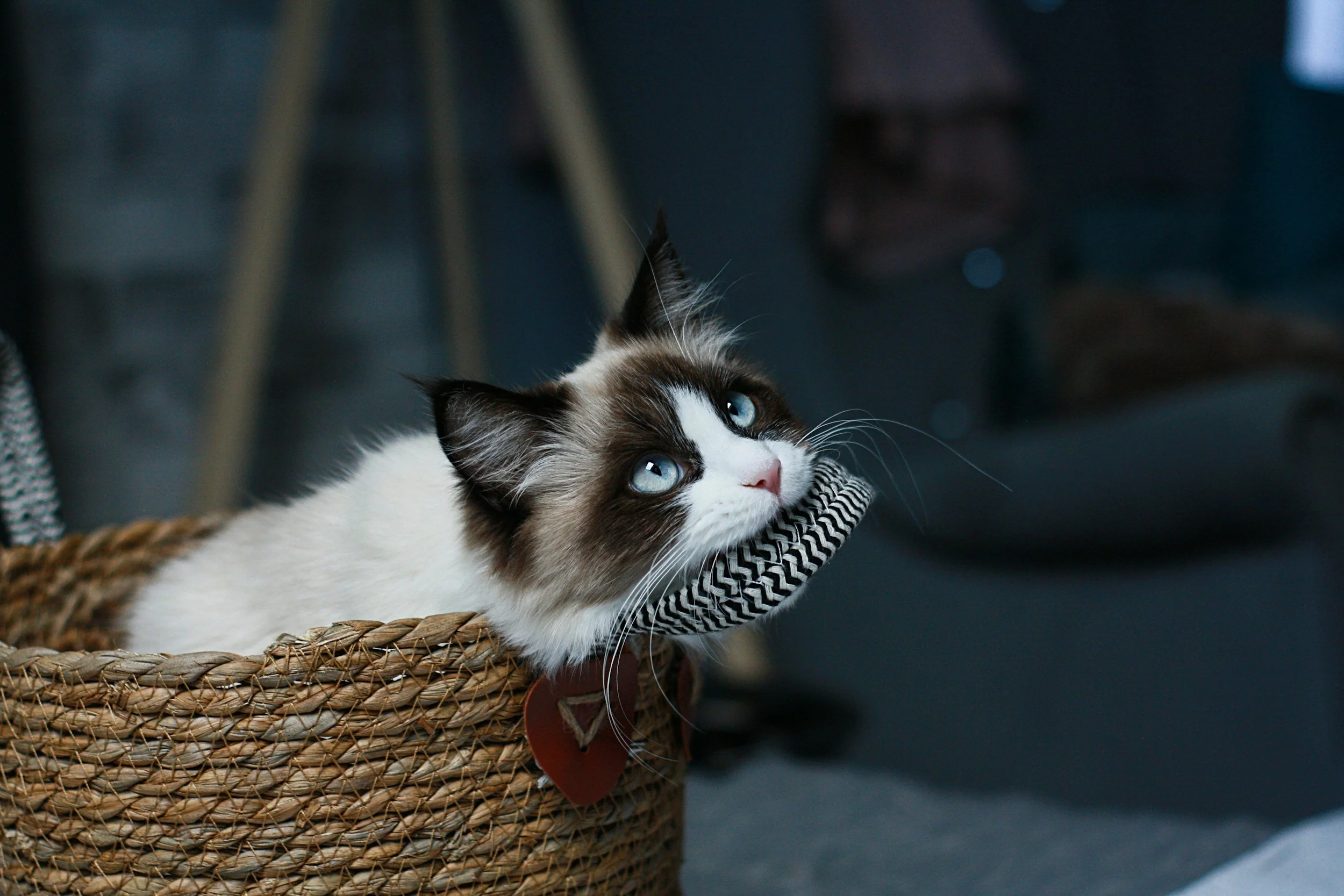
So, you’ve fallen in love with a Siberian kitten.
Perhaps you have spent a few evenings scrolling through photographs. Maybe you have been researching the Siberian breed, wondering whether they might be a good fit for your family.
And then you find a breeder.
You send that first message:
“Hi! We’re interested in one of your kittens. How does the process work?”
And this is often where many first-time pedigree kitten parents discover something they didn't quite expect.
There is a process.
There are conversations, paperwork, health checks, vaccinations, contracts, pedigrees, registration documents and sometimes quite a bit of waiting.
And you might find yourself thinking:
“I didn't know there was so much paperwork involved in getting a pedigree cat!”
There is.
But the good news is that you shouldn't have to navigate it alone.
At WinterForest Siberians, we believe that bringing home a pedigree kitten should feel exciting, reassuring and personal — not confusing.
So, what actually happens?
It starts before there are kittens to choose from
One of the biggest differences between an ethical breeder and someone simply producing kittens is that the work doesn't begin when the kittens are born.
It begins much earlier.
A responsible breeding programme involves decisions about which cats should be bred, why they are being bred together, their pedigrees, temperament, health history and the future of the breed.
Health screening is part of this process too.
Depending on the breed and the individual breeding programme, this can involve genetic testing, veterinary examinations, cardiac screening and screening for particular inherited conditions.
For a Siberian breeder, this is particularly important because producing a beautiful kitten is only one part of the goal.
We want to produce healthy, well-adjusted cats with excellent temperaments and a sound foundation for life.
This is also why organisations such as TICA and CFA emphasise responsible breeding, appropriate health care, accurate records and placing kittens with families who are prepared for a lifelong commitment.
At WinterForest, our health and breeding decisions happen long before a prospective pawrent ever meets a kitten.
Then the kittens arrive… and the waiting begins
Once kittens are born, it can be tempting to think:
“When can I take my kitten home?”
But there is quite a lot that needs to happen first.
The first weeks are about watching.
We watch how kittens grow.
How they eat.
How they interact with their siblings.
How they respond to handling.
How their personalities begin to emerge.
And, importantly, how they develop physically.
This is one reason choosing a pedigree kitten isn't always as simple as:
“I want the fluffy one with the blue eyes.”
Because the kitten who catches your eye in a photograph may not necessarily be the kitten whose personality is the best match for your household.
A good breeder gets to know the kittens as individuals.
And sometimes, the breeder sees something in a kitten that a first-time pawrent simply wouldn't know to look for.
That is part of our job.
“But can't I just reserve the kitten I like?”
Sometimes, yes.
But ethical kitten placement isn't only about who chooses first.
At WinterForest, we want to understand you too.
What is your household like?
Do you have children?
Other cats?
A dog?
Do you work long hours?
Are you looking for an outgoing kitten who wants to be involved in everything?
Or would a calmer personality suit your home better?
Are you looking for a companion?
A future show cat?
Or potentially a breeding cat?
These questions aren't about judging whether someone is “good enough” for a kitten.
They're about finding the right match.
A reputable breeder should care about where their kittens are going and should remain interested in their welfare after the sale. This ongoing relationship is also reflected in the ethical standards promoted by major cat registries.
Then comes the part nobody sees: the preparation
While you're waiting for your kitten to grow, there is a lot happening behind the scenes.
Your kitten's veterinary care is monitored.
Vaccinations are administered according to an appropriate schedule.
Parasite prevention and health checks are undertaken.
Their development is monitored.
They are socialised.
They learn about handling, grooming, litter habits, food and the everyday sounds and experiences that help prepare them for life beyond the cattery.
TICA advises prospective owners to look for appropriate vaccination and veterinary records and recommends that kittens are sufficiently mature, vaccinated and socialised before leaving their breeder.
At WinterForest, we don't want to simply hand you a kitten.
We want to hand you a kitten who is ready for the next chapter of their life.
“Wait… my cat has a birth certificate?”
Well, sort of!
This is another moment when many first-time pedigree cat parents say:
“I didn't realise my cat would come with paperwork!”
A pedigree isn't simply a fancy certificate.
It records your cat's ancestry and provides traceability through their registered lineage.
WinterForest registers our litters with recognised registries including TICA (The International Cat Association) and/or CFA (Cat Fanciers' Association).
Every WinterForest kitten receives pedigree documentation, with registration arrangements depending on the kitten's placement.
This documentation forms part of the kitten's identity and history — not an optional “extra.”
TICA and CFA both have formal systems for registering pedigreed cats and transferring ownership, which is why there can be more paperwork involved than with an ordinary household pet.
And yes…
Sometimes there really are forms to fill in.
But we help you through them.
The contract isn't there to scare you
Another piece of the puzzle is the sales agreement.
You might initially think:
“Why do I need a contract to get a kitten?”
Because a good contract protects both sides.
It sets out what has been agreed between the breeder and the new family.
It can cover things such as:
health guarantees
ownership
sterilisation requirements
registration
breeding or show rights where applicable
care expectations
return or rehoming arrangements
responsibilities of both breeder and owner
The purpose isn't to make the relationship feel formal.
It is to make sure that everyone understands what they are agreeing to.
Clear documentation is considered an important part of responsible breeding and kitten placement.
We would much rather answer your questions before you take your kitten home than discover six months later that something was misunderstood.
And then… suddenly, it's almost time
This is usually when the excitement really starts.
You've been watching photographs.
You've watched your kitten grow.
You've probably already started buying things you didn't realise you needed.
And then comes the message:
“Your kitten is getting ready to go home.”
At WinterForest, the handover isn't simply:
kitten → carrier → goodbye.
We talk you through what your kitten has been eating.
What litter they are accustomed to.
Their routine.
Grooming.
Settling into a new environment.
What to expect during the first few days.
What is normal.
And, perhaps most importantly, what to do if you're worried.
Because the first few days with a new kitten can feel surprisingly overwhelming.
Even when you've prepared everything perfectly.
“What if I get home and panic?”
You probably won't.
But if you do?
Reach out to us.
Your kitten may be small, but the responsibility can suddenly feel very big.
“Is she eating enough?”
“Why is he hiding?”
“Is this normal?”
“Did I do something wrong?”
“She hasn't used the litter yet!”
These are exactly the sorts of questions new pawrents ask.
And we would much rather you ask than sit at home worrying.
TICA itself encourages buyers to remain in contact with knowledgeable breeders when questions or concerns arise after bringing a kitten home.
At WinterForest, the relationship doesn't end when the kitten leaves our cattery.
In many ways, it is just beginning.
And what happens if your kitten isn't staying in Singapore?
This is where things become a little more complicated.
International kitten relocation involves considerably more planning than a domestic handover.
There can be veterinary requirements, documentation, transport arrangements, import requirements and timing considerations depending on the destination country.
And this is one of the reasons that, whenever possible, WinterForest will first recommend that prospective families look for an established, ethical Siberian breeder in their own country.
It may sound strange for a breeder to say:
“You should probably buy your kitten from someone else.”
But we genuinely mean it.
If there is an excellent breeder in your own country who shares similar standards for health, temperament, welfare and lifelong support, we would rather you have your kitten closer to home.
There are practical reasons for this.
There is less travel involved.
Relocation is simpler.
You have access to a breeder within your own country.
And if you ever need breed-specific guidance, that breeder can potentially support you locally.
We don't believe every kitten needs to travel across the world simply because someone has fallen in love with a particular cattery.
Sometimes the most ethical answer is to help a family find the right breeder closer to home.
But sometimes… the right kitten is a WinterForest kitten
Occasionally, families still choose to work with us internationally.
Perhaps they have followed our breeding programme for years.
Perhaps they are looking for particular bloodlines.
Perhaps they are interested in showing or breeding.
Or perhaps they simply feel that a particular WinterForest kitten is the right match for their family.
When that happens, we take the responsibility seriously.
Our kittens have gone on to become part of families in Japan, the United States, the United Kingdom, Australia and China, among other destinations.
And once that kitten has crossed a border, our responsibility doesn't suddenly disappear.
Your kitten may move countries. Our support doesn't.
This is something that matters enormously to us.
A WinterForest kitten might eventually live thousands of kilometres away from Singapore.
But their story with us doesn't end at the airport.
Our graduates continue to have access to our knowledge, experience and support as they grow.
Questions about grooming?
Ask us.
Questions about behaviour?
Talk to us.
Not sure whether something you're seeing is normal?
Message us.
Need help understanding something about your Siberian?
We're here.
And if you eventually decide that your kitten has inspired you to learn more about showing, breeding or becoming more involved with the breed?
That conversation can begin too.
Because we don't think of our kittens as products that leave our care.
They are our graduates.
And we like knowing how they're doing.
So, what does getting a pedigree kitten actually look like?
If we stripped away all the paperwork and technical terms, it would look something like this:
You enquire.
↓
We get to know you.
↓
We talk about the breed and what you're looking for.
↓
We determine whether WinterForest is the right fit for your family.
↓
A kitten is matched with you when the timing and personality are right.
↓
The kitten continues growing, developing and being socialised.
↓
Veterinary care, vaccinations and health checks are completed.
↓
Registration and pedigree documentation are prepared.
↓
Your agreement and kitten-care information are finalised.
↓
We prepare you — and your home — for your kitten.
↓
Your kitten goes home.
↓
And we remain here.
That final step is perhaps the most important one.
Because getting a pedigree kitten isn't simply a transaction.
It is the beginning of a relationship between you, your cat and the breeder who brought them into the world.
A pedigree kitten should come with more than papers.
It should come with a history.
A breeding programme behind it.
Health screening.
Thoughtful planning.
Socialisation.
A breeder who knows its personality.
Clear documentation.
A commitment to welfare.
And someone you can still call when your kitten is no longer a kitten.
That is what we believe being an ethical breeder means.
So, if you're considering a Siberian kitten and the process feels a little more involved than you expected, don't worry.
That's because there is a lot going on behind those fluffy little faces.
And you don't need to know everything before you begin.
That's what we're here for.
Welcome to WinterForest.
Your kitten's journey starts long before you bring them home — and our support continues long after.